|
|||||||||
| :: Archive > Interviews | |||||||||
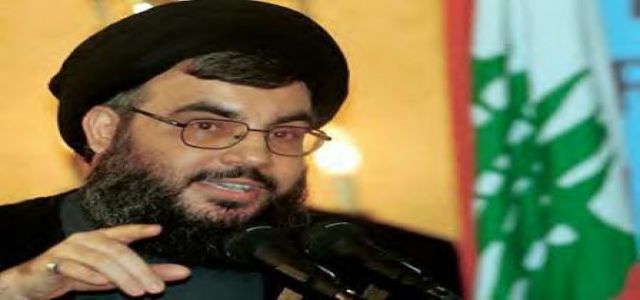
Hezbollah author Augustus Norton: “Egypt is far from being able to enjoy truly competitive elections
No shortage of commentary followed last summer’s war between Hezbollah and Israel, and the image of Hezbollah’s leader, Hassan Nasrallah, on kiosks around Cairo, as in other cities throughout the mainly Sunni Arab world, seemed a quick explanation for the war’s regional impact.
|
|||||||||
| Tuesday, August 7,2007 00:00 | |||||||||
|
|||||||||
|
No shortage of commentary followed last summer’s war between Hezbollah and Israel, and the image of Hezbollah’s leader, Hassan Nasrallah, on kiosks around Cairo, as in other cities throughout the mainly Sunni Arab world, seemed a quick explanation for the war’s regional impact. And yet opinion on Hezbollah since has often been confined to extremes, seeing it either as a purely terrorist organization or a group garnering admiration for their standoff with Israel. A new book by an American university professor who was a UN military observer in southern Lebanon in the early 1980s, "Hezbollah: A Short History," offers what The New York Review of Books summed up as an "admirably concise and balanced primer" on the Shia political party and paramilitary group. Augustus Richard Norton, professor of international relations at Boston University, In your book you describe Hezbollah as "Janus-faced." What do you mean? For many of its followers, there is no contradiction between Hezbollah as militia and Hezbollah as a representative political party. They see themselves faced with a severe security problem, and they have direct experience of Israel"s attacks on Lebanon and its prior occupation of southern Lebanon. In their view, they have a security problem; not one caused by Hezbollah, as much as one addressed by Hezbollah. In my recent visits to southern Lebanon I have been impressed by the fact that Hezbollah actually gained support after the August 2006, and its rationale for defending Lebanon had grown in acceptance. Frankly, I predicted that this would happen. I noted a year ago that as the war went on, time would not necessarily play in Israel"s favor, and it did not because Hezbollah gained support in its core Shia constituency. Have we seen the full fallout of last summer"s war, a year later? In Lebanon, the war"s impact is still being felt. The war was like a bomb thrown into the Lebanese political system. Following the war, Hezbollah tried to exploit the solidarity it was enjoying in the Shia community, as well as its alliance with other opposition elements, especially the Free Patriotic Movement of Michel Aoun. The party misjudged its power, however, and the country is now locked in a stalemate. I worry that if the stalemate is not broken by the election of a president to replace Emile Lahoud, whose term expires in November, that the situation will grow more dangerous. What is behind recent American strategies to arm different factional groups in the region, whether Fatah in the months leading up to Hamas" takeover of Gaza or Sunni insurgent groups in Lebanon, as alleged by American investigative reporter Seymour Hersh this spring? Will Hamas be blamed for the impoverishment? Does solidarity or admiration for Hezbollah among Egyptians and across class lines, as you note in your book, suggest support for other Islamist groups, like the Muslim Brothers, or is it confined to opinions about Lebanon and Israel? |
|||||||||
|
tags: Hezbollah / Egypt / Competitive / Israel / Sunni
Posted in Interviews |
|||||||||
|
|||||||||
|
|
|||||||||
| Related Articles | |||||||||
|
|
 Back to Homepage


 Facebook
  Digg
Digg  Yahoo
Yahoo  Del.icio.us
  reddit
  StumbleUpon
  Mixx
Mixx  Google


Twitter
Facebook
Most Viewed
Join Our Maillist
Video


|
© The Muslim Brotherhood All copyright and re-transport from the site of any material are allowed as long as the source mentioned |
