|
|||||||||
| Palestine | |||||||||
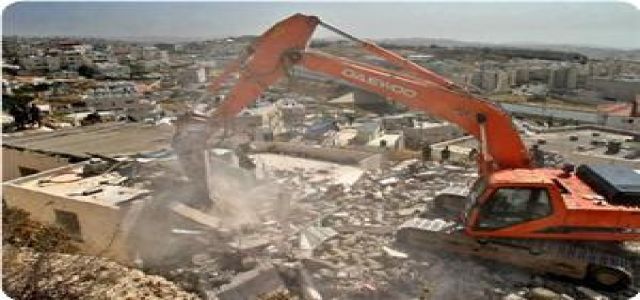
Human Rights Organizations Warn of Obstacles to Gaza Reconstruction (Report)
The government is actively striving to develop the idea of constructing buildings and houses from clay as a substitute for buildings made of cement due to its scarcity in the Gaza Strip, and because of the resulting delay in reconstruction of the Strip as well.
|
|||||||||
| Sunday, May 17,2009 00:56 | |||||||||
|
|||||||||
|
After the passage of more than a hundred days since the end of the Zionist war on the Gaza Strip, international humanitarian and human rights organizations are warning of the consequences of an alarming humanitarian situation in the Strip. This is due to an inability to reconstruct homes and businesses and to repair the extensive damage caused to infrastructure and basic services that were destroyed in the assault. That inability is a result of the ongoing Israeli policy of keeping the border crossings closed and refusing to allow the entry of many materials necessary for reconstruction. The policy is being implemented in an atmosphere of international complicity and silence. Robert Serry, the United Nations Special Coordinator for the Middle East Peace Process, after a visit to the Gaza Strip on April 30th, warned that “the situation is really worrying, and it seems it will be impossible to meet the humanitarian needs and repair the damage as long as it is impossible to bring in the necessary quantities of funds and materials.” He added, “Time is passing, and we do not see any real progress.” Rehabilitation and Recovery At the same time he warned of, “a resumption of the violence due to the lack of progress in reconciliation between the Palestinians, in the opening of the border crossings, in the exchange of prisoners, and in the extension of security on the borders,” as he put it. UNICEF added: “Electricity is still unavailable to 10% of the population, while about 9% of them lack safe drinking water;” not only that; 65 types of essential medicines have run out at the central warehouse in the Gaza Strip. Operation "Cast Lead" has destroyed what was already, after months of siege, a fragile economy in the Strip. In addition, 35 thousand people in the Strip have no access to drinking water or safe sewage systems.” She stressed that “unless the European Union places limits on strengthening its relations with Israel, it gives a dangerous signal to the world that it is in agreement with a policy of destruction and siege.” Despite the foregoing, the American administration has maintained silence over the continuation of the occupation’s criminal blockade and its refusal to allow the entry of a great deal of basic aid and materials necessary for reconstruction. Not only that; the American administration has gone out of its way to downplay the effects of the border closure on Gaza, which has prompted human rights organizations to criticize American officials. Human Rights Watch, in a letter addressed to the US Secretary of State, criticized her testimony before the Congressional Committee on Foreign Relations, in which she minimized the impact of closing Gaza’s borders by stating that the crossings are not completely closed and that many supplies are being transferred through the crossings now. The organization said: “The Israeli restrictions on the borders are preventing the rebuilding of homes and schools destroyed or badly damaged during the recent military aggression, which lasted three weeks.” Sarah Leah Whitson, the executive director for the Middle East and North Africa in the organization, said: “Secretary of State Clinton’s comments made it seem like border closure is not a big problem for the civilians of Gaza,” emphasizing rejection of the policy of collective punishment of civilians in Gaza. Mud Houses and the Challenge to the People of Gaza Despite the negative impacts caused by the Zionist war on Gaza and the continued Israeli closure of the border crossings, the people have not surrendered to this situation and all its tragic implications; rather, they are actively participating with ministries and governmental institutions to deal with what can be done. Examples of this approach include feasibility studies for model buildings and installations using mud, rubble and the ruins of houses and buildings as substitutes for cement and other construction materials that are being prevented from entering the Strip. In this regard, the Department of Public Works and Housing of the legitimate government in Gaza established a committee to conduct empirical studies for the establishment of model buildings and installations from clay. The Minister of Public Works and Housing, Yousuf al-Mansi, announced that his government would construct model buildings of this type, including a mosque, school and clinic, which will be treated as an experiment for evaluation. If they pass the test, then the Department will start expanding the implementation of such projects. The government is actively striving to develop the idea of constructing buildings and houses from clay as a substitute for buildings made of cement due to its scarcity in the Gaza Strip, and because of the resulting delay in reconstruction of the Strip as well. He stressed the determination of the people of Gaza to get through this period and its challenges, and he commended the government of Gaza for making great efforts to communicate with Arab and international governments and institutions in order to open the crossings and allow the entry of cement and other construction materials to the Strip. |
|||||||||
|
Posted in Palestine |
|||||||||
|
|||||||||
|
|
|||||||||
| Related Articles | |||||||||
|
|
 Back to Homepage


 Facebook
  Digg
Digg  Yahoo
Yahoo  Del.icio.us
  reddit
  StumbleUpon
  Mixx
Mixx  Google


Twitter
Facebook
Most Viewed
Join Our Maillist
Video


|
© The Muslim Brotherhood All copyright and re-transport from the site of any material are allowed as long as the source mentioned |
