|
|||||||||
| :: Issues > Activites | |||||||||
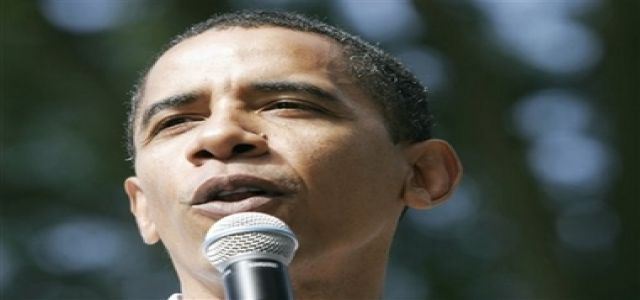
Will Islamists Be Part Of The President’s New Dialogue?
Two stories this morning highlight what I think is a key question about President Obama’s speech tomorrow in Cairo. The first is the news that, “under pressure from the United States, the Secretariat-General of the lower house of the Egyptian Parliament invited ten members of the Muslim Brotherhood parliamentary bloc to attend Barack Obama’s speech in Cairo on Thursday.”
|
|||||||||
| Thursday, June 4,2009 05:45 | |||||||||
|
|||||||||
|
Two stories this morning highlight what I think is a key question about President Obama’s speech tomorrow in Cairo. The first is the news that, “under pressure from the United States, the Secretariat-General of the lower house of the Egyptian Parliament invited ten members of the Muslim Brotherhood parliamentary bloc to attend Barack Obama’s speech in Cairo on Thursday.”
The second is Al Qaeda’s attempt to pre-but tomorrow’s speech:
While it’s unclear precisely when these messages were recorded — or whether bin Laden’s was held back by Al Jazeera until it could have its greatest, most newsworthy impact — there’s already a lot of evidence that Al Qaeda find Barack Obama a far less perfect instrument for their propaganda than their dream candidate George W. Bush — and that’s great. It’s clearly a good thing for the United States when the President of the United States isn’t the most reviled person in the world. But while being not-Bush is obviously an advantage for Obama, it remains to be seen whether the president will take advantage of this better footing to really address some of the aspects of U.S. policy that give extremist propaganda such resonance — such as American support for corrupt and oppressive authoritarian regimes like Egypt and Saudi Arabia — and begin to disaggregate America’s Islamist critics from America’s Islamist enemies. In a recent BBC interview, the president described the “dialogue” he hoped to start with his Cairo speech, and said that message he hopes to deliver is that democracy, rule of law, freedom of speech, freedom of religion — those are not simply principles of the West to be hoisted on these countries.”
The invitation of the representatives from the Egyptian Muslim Brotherhood, the seminal Islamist organization in the Middle East, to the Cairo speech is an encouraging sign that the president is entering into this new dialogue genuinely. One of the greatest mistakes of the previous administration, in my view, was to take an unerringly hostile view of Islamism, which is far more diverse and vital than many American commentators are willing to recognize. Encouraging President Obama to make democratic reform a central element of his Middle East policy, Brian Katulis and Michael Cohen write today in World Politics Review, “Islamist political movements play an integral role in advancing democracy.”
By conflating all Islamist movements together and treating these groups as hostile to democracy by definition, policymakers not only create more enemies for the United States, they also ignore the extremely valuable and vibrant debate that is now occurring among Islamic scholars as to the correct arrangement of society, a debate that has generated a deeply complex and compelling critique of Western-style politics. (At the risk of seriously oversimplifying, the key difference is that derived Western liberalism tends to see the goal of politics as the protection and expansion of individual liberty, whereas Islamism tends to see the goal of politics, and of society itself, as the pursuit of justice.) We shouldn’t kid ourselves: Islamism contains a significant challenge to many of liberalism’s assumptions. But it’s folly to think that genuine reform can occur in the Middle East while denying it a place at the table. For various reasons, there is a deep misunderstanding and fear in the U.S. about Islamism. Discussions of it, to the extent that they occur in the major media, usually occur after some horrific act of violence, and are usually accompanied by footage of angry demonstrators or masked Hamas gunmen. It’s worth pointing out, however, the U.S. facilitated the establishment of the first Islamist-controlled government in the Arab world, in Iraq — even if the architects of the war are loathe to admit this. In that and other ways, the U.S. is already deeply engaged in this debate — my hope is that President Obama’s speech tomorrow will mark the beginning of a more forthright and productive engagement with it.
Transcript: Obama"s speech in Cairo (PDF) |
|||||||||
|
Posted in Activites , MB in International press , Human Rights |
|||||||||
|
|||||||||
|
|
|||||||||
| Related Articles | |||||||||
|
|
 Back to Homepage


 Facebook
  Digg
Digg  Yahoo
Yahoo  Del.icio.us
  reddit
  StumbleUpon
  Mixx
Mixx  Google


Twitter
Facebook
Most Viewed
Join Our Maillist
Video


|
© The Muslim Brotherhood All copyright and re-transport from the site of any material are allowed as long as the source mentioned |
