|
|||||||||
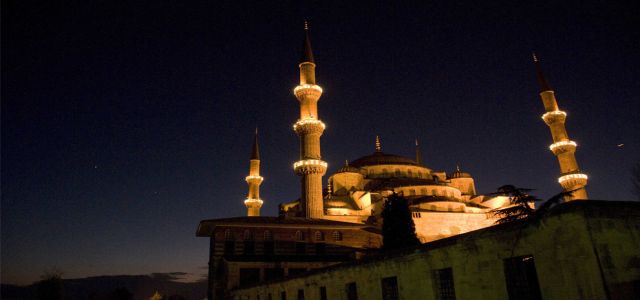
Anti-Minaret Initiative and Interfaith Dialogue
Muslims around the world await the coming 29th of November on which Switzerland will vote on an initiative to ban the construction of minarets.
|
|||||||||
| Wednesday, December 2,2009 18:13 | |||||||||
|
|||||||||
|
Muslims around the world await the coming 29th of November on which Switzerland will vote on an initiative to ban the construction of minarets. Although the initiative was introduced by the biggest party in Switzerland, the Swiss People's Party (SVP), the government, Parliament, and most political parties and religious communities are against it. The issue of minarets sheds light on many other aspects and uncertainties about Muslims' integration in Swiss society.
In Switzerland, the land of direct democracy, any citizen with a political concern can present an initiative for the Swiss people to vote on. Two conditions must be fulfilled: the initiative must contain a concrete proposal for a change in the constitution, and it must be signed by at least 100,000 citizens. On July 8, 2008, a group of citizens presented to the Swiss government a "people's initiative" with 114,895 signatures demanding the addition of the following regulation to the Swiss Federal Constitution: "The construction of minarets shall be banned."Minarets and Freedom of Religion The committee behind the initiative says that the prohibition does not target Islam as a religion; it is rather about Islam as a political concept. According to the committee, the minaret is a symbol of political Islam and a sign of domination. In Switzerland, religion may not be set above the state. The prohibition of minarets is meant to ensure that the Swiss legal order and concept of society are not influenced, explains the committee. Article 15 of the Swiss Federal Constitution says, "The freedom of religion and philosophy is guaranteed. All persons have the right to choose their religion or philosophical convictions freely, and to profess them alone or in community with others. All persons have the right to join or to belong to a religious community, and to follow religious teachings. No person shall be forced to join or belong to a religious community, to participate in a religious act, or to follow religious teachings."
Nevertheless, it must be remembered that almost 115,000 citizens want the construction of minarets to be forbidden in Switzerland. These signatures must be interpreted as a sign that there are uncertainties among the Swiss population about Islam. These uncertainties must be taken seriously and reasons behind them should be analyzed.
Muslims' demands for separate cemeteries, separate opening times of swimming pools for men and women, and the exemption of girls from sporting activities in schools disturb many people. They are afraid of the birth of a parallel society that can lead to conflicts, as in France, for example.
The questions being discussed in public at present also relate to the Christian minorities in Islamic countries where Christians are discriminated against and persecuted. They may practice their faith only in private and may not confess it publicly. Marriages between Christians and Muslims are forbidden, and parents may not choose the faith of their children. In some Islamic countries, Christian communities are not allowed to build new churches or purchase any property. In some other Arab countries, wearing Christian symbols in public is forbidden.
In this respect, the SCR sought contact with ambassadors of the Organization of the Islamic Conference (OIC). In September 2009, a short meeting between an SCR delegation and OIC ambassadors was held, and various understandings of the concept of freedom of religion were discussed. The SCR explained its stance toward the anti-minaret initiative to the ambassadors, and then it was agreed that the dialogue would continue. About 30 years ago, there were 15,000 Muslims in Switzerland; today there are 400,000. They comprise 5 percent of the total population of Switzerland. This figure illustrates the importance of interfaith dialogue in Swiss society. In the future, the three monotheistic religions (Judaism, Christianity, and Islam) will have to take on great responsibility toward peace among the religions and toward social cohesion, not only in Switzerland but all over the world. |
|||||||||
|
tags: Interfaith Dialogue / Switzerland / SVP / Parliament / Political Parties / Religious Communities / Swiss Government.
Posted in |
|||||||||
|
|||||||||
|
|
|||||||||
| Related Articles | |||||||||
|
|
 Back to Homepage


 Facebook
  Digg
Digg  Yahoo
Yahoo  Del.icio.us
  reddit
  StumbleUpon
  Mixx
Mixx  Google


Twitter
Facebook
Most Viewed
Join Our Maillist
Video


|
© The Muslim Brotherhood All copyright and re-transport from the site of any material are allowed as long as the source mentioned |
