|
|||||||||
| :: Issues > Human Rights | |||||||||
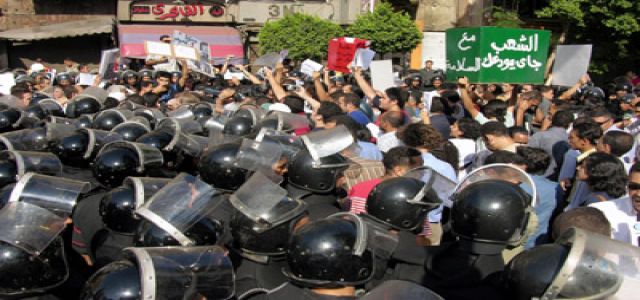
Human rights coverage spreads, despite government pushback
The media in the Middle East loved the Intifada. Every detail of Israel’s violations of human rights in the late 1980s in the West Bank and Gaza appeared in the Arabic and Farsi press.
|
|||||||||
| Tuesday, February 16,2010 20:52 | |||||||||
|
|||||||||
|
The media in the Middle East loved the Intifada. Every detail of Israel’s violations of human rights in the late 1980s in the West Bank and Gaza appeared in the Arabic and Farsi press. The governments that owned or controlled these media outlets loved it, too. When pan-Arab satellite television stations emerged in the 1990s, they looped hours of footage of Israeli soldiers and Jewish settlers repressing Palestinians.
But it did not take long for Arab journalists to use their newly honed reporting skills on their own political leaders. “Prior to the creation of the Palestinian Authority in 1993, Palestinian journalists reported on violations by the Israelis, but after 1993 they also started reporting on violations perpetrated by the PA,” said Musa Rimawi, director of the
News-starved audiences across the region flocked to the new channels, foremost among them Al-Jazeera, owned by the tiny emirate of Outside of the Palestinian issue, however, human rights reporting remained a tiny component of broadcast and print output. Then came the Internet. The digital revolution that started in the late 1990s is still transforming the gathering and dissemination of news in the Arab world, where dictatorships far outnumber democracies. Online journalism and blogging are flourishing. Once-taboo subjects such as human rights abuses are now covered in unprecedented detail by an army of professional and “citizen” journalists in a region with the fastest growth of Internet penetration in the world. The speed of the transformation caught many governments unaware. But leaders who depend on controlling information for their political survival have awakened, and they are turning to technology to censor and filter the Internet. If that fails, they resort to harassment, attacks, or imprisonments. In the past year or so governments have pushed back against independent reporters and bloggers, but journalists believe that in the long run technology will make it impossible for all but the most authoritarian regimes to stem the tide of information. For decades, the mainstream media in Journalist Noha Atef, who runs TortureInEgypt, a Web site that reports on abuses in And the old mainstream is itself changing. “Today I get many stories from the newspaper, whereas a couple of years ago I had to rely almost exclusively on reports by human rights organizations,” Atef said. The Moroccan media’s appetite for human rights issues was further whetted when a truth commission began examining abuses committed during the 1961-1999 reign of King Hassan II. Although the hearings of the Equity and Reconciliation Commission ended in 2005, the independent press has continued to report on abuses—and not just under Hassan, but under his successor, Mohammed VI, as well. A change of regime in When A number of Bahraini newspapers, particularly the daily Al-Wasat, covered what came to be known as the Bandargate scandal, an alleged political conspiracy by government officials in “In the past decade, there has been a marked increase in the quantity as well as quality of reporting on human rights violations and also the work of domestic human rights activists,” Gamal Eid, director of the Cairo-based Arab Network for Human Rights Information, told CPJ. “Much of it began online, but we now also see this type of reporting taking place in print.” In “This type of journalism has raised awareness among the public—it has had a positive role,” Abdelaziz Nouaydi, human rights lawyer and president of the Moroccan human rights group Adala, told CPJ. In some cases it has also had a positive outcome. In “Seventy-five percent of journalists say that their top priority is political and social change,” Lawrence Pintak, lead author of the survey, told CPJ. “And you see this playing out in this more aggressive coverage around human rights issues, whether it’s in Palestine by a Bahraini journalist or whether it’s in Egypt by Egyptian journalists,” said Pintak, who is now founding dean of the Edward R. Murrow College of Communication at Washington State University. This increased focus on human rights has prompted a backlash from regimes that use government-friendly media to attack individual journalists and outlets. Rights defender Eid notes that the Egyptian daily Rose al-Yusef “devotes page 5 to attacking publications, journalists, and civil society organizations that are vested in human rights investigations and reporting.” In In While bloggers and activists are bearing the brunt of the government counterattack, all journalists are feeling the heat. “There was actually more reporting of human rights kinds of issues and democracy kinds of issues a few years ago,” said Marc Lynch, director of the Institute for Middle East Studies at Al-Jazeera anchor Mohamed Krichen disagrees. “No, our editorial policy has not changed. We report on human rights cases when they arise. They are an important part of the news, but do not constitute the entirety of our coverage. We are a news organization, and not a human rights group, and our coverage reflects that,” Krichen told CPJ. “What we have,” said Pintak, a former CBS correspondent in the The consensus among those journalists and academics interviewed by CPJ is that any dip in the upward curve of human rights reporting is only temporary. Countries in the region cannot seal off information from the outside world. Many of these nations embrace trade, so they need to embrace the Internet as well. They also have an overwhelmingly young population that is increasingly wired and aware of freedoms enjoyed by their contemporaries in other parts of the world. “This is a very different world from in the ’90s and it’s a world in which governments can no longer completely control the message,” Pintak said. “They can crack down on individual news organizations, they can jail individual reporters, they can harass individual editors, but they can’t stop the flow of information.” |
|||||||||
|
tags: Torture / Human Rights / Military tribunal / Jewish Settlers / Intifada / Violations Of Human Rights / Gaza / West Bank / Palestinians / Israeli Soldiers / Political Leaders / Palestinian Authority / Media Freedoms
Posted in Human Rights , Torture |
|||||||||
|
|||||||||
|
|
|||||||||
| Related Articles | |||||||||
|
|
 Back to Homepage


 Facebook
  Digg
Digg  Yahoo
Yahoo  Del.icio.us
  reddit
  StumbleUpon
  Mixx
Mixx  Google


Twitter
Facebook
Most Viewed
Join Our Maillist
Video


|
© The Muslim Brotherhood All copyright and re-transport from the site of any material are allowed as long as the source mentioned |
