|
|||||||||
| :: Issues > Obama | |||||||||
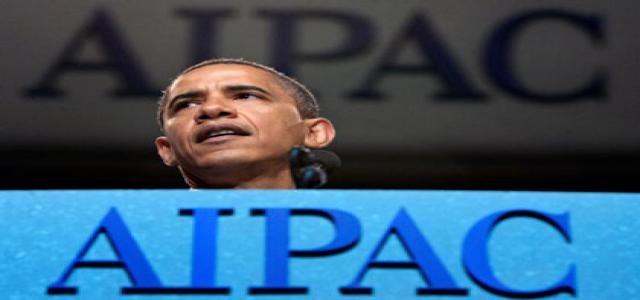
Overcoming AIPAC is not enough
Lawrence Davidson outlines a strategy for unshackling the United States from Israel, based on melding the liberation of the US from AIPAC with the revival of American national interests in the broader Middle East and Muslim world, and with the viable future of Palestine.
|
|||||||||
| Saturday, October 2,2010 19:39 | |||||||||
|
|||||||||
|
George Soros, J Street and lobby politicsThe first story appeared in the Israeli newspaper Ha’aretz on 26 September 2010 and is entitled “Billionaire George Soros revealed as mystery J Street donor”. It is now public information that Soros sees AIPAC as “too hawkish” and so he and his family have thrown their weight behind the more compromising, “dovish” J Street. They have done so to the tune of 245,000 dollars a year. Soros has in fact been making these contributions since J Street’s founding in 2008. This is certainly not all the money the Washington-based lobby obtains per year. J Street has about 10,000 donors and they provide about 11 million dollars annually. Changing public opinionThe second story comes in the form of a short essay by the Irish writer Maidhc O'Cathail that appeared in the Salem-News.com. It is entitled “The truth will set US free: breaking Israel’s stranglehold over American foreign policy”. O'Cathail quotes Philip Giraldi, who is executive director of the Council for the National Interest (an organization critical of the American-Israel alliance), a former CIA officer and also a contributer to the American Conservative. Giraldi's position is that overcoming AIPAC “must be done from the bottom up as Israel cannot be challenged in the mainstream media, Congress, and in the White House”. The tactic here is to convince enough American voters that “Israel is and always has been a strategic liability that has done immense damage to the United States and its worldwide interests” so they will be led to demand that the Congress and political parties abandon AIPAC. This has proven anything but easy. According to Jeff Gates, a former counsel for the Senate Committee on Finance, the present lack of transparency on the various sources of lobby money means that “the American public is ignorant of Israel's all-pervasive influence”.
For instance, consider the relatively wide coverage of Israel's recent decision not to extend its settlement freeze and thereby threaten an end to the Obama administration's efforts at peace talks. So, unlike 10 years ago, one now can find articles and op-ed pieces critical of Israel and, by extension, AIPAC as well. And, while they do not yet appear frequently enough to create a tipping point in public awareness, they are beginning to contribute to a slow but perceptible shift in public opinion. Even a recent poll conducted by the American Jewish organization, The Israel Project, suggests a steady decline in the number of American citizens who feel that the US must continue to support Israel. The truth is that the two approaches, one centered on the national capital and the other centered on main street, have to be pursued simultaneously. And, there is now movement at both levels. Unshackling the USAWhat does all this mean for those involved in the fight against AIPAC's influence in American foreign affairs? It means that the goal of displacing the Israel lobby is really not sufficient. The J Street people and those who are presently campaigning at the grassroots have to argue the fate of US national interests in broader terms. For instance:
1. It must be made clear that a rejuvenation of American interests in the Middle East and Muslim world is linked much more directly to the fate of Palestine than to Israel. If any final settlement fails to insure the creation of a viable Palestinian state, the US will be blamed and our interests will continue to suffer whether we are still allied to Israel or not. It must be made clear that, as an advocate for the destruction of Palestine, AIPAC advocates the destruction of US interests as well. So you see that as we move ahead we must meld the liberation of the United States from AIPAC's wholly negative influence with the revival of US national interests in the broader Middle East and Muslim world, and that in turn with the viable future of Palestine. All three must be promoted as an interlinked package. If they are not, Washington will certainly some day be free of AIPAC, but Palestine will be left under the pernicious shadow of Israel. For this we will always be blamed and our interests will always suffer. Lawrence Davidson is professor of history at West Chester University. He is the author of numerous books, including Islamic Fundamentalism and America's Palestine: Popular and Official Perceptions from Balfour to Israeli Statehood.
Source: Redress Information & Analysis (http://www.redress.cc). Material published on Redress may be republished with full attribution to Redress Information & Analysis (http://www.redress.cc)
|
|||||||||
|
tags: AIPAC / United States / Middle East / Palestine / Muslim World / Israel Lobby / Congress / Settlement / Washington / Jerusalem / Palestinian / Muslims / Zionist / Hamas / Hezbollah / Iran / John Mearsheimer / Stephen Walt / White House / J Street / George Soros / Haaretz / Jeff Gates
Posted in Obama , Palestine |
|||||||||
|
|||||||||
|
|
|||||||||
| Related Articles | |||||||||
|
|
 Back to Homepage


 Facebook
  Digg
Digg  Yahoo
Yahoo  Del.icio.us
  reddit
  StumbleUpon
  Mixx
Mixx  Google


Twitter
Facebook
Most Viewed
Join Our Maillist
Video


|
© The Muslim Brotherhood All copyright and re-transport from the site of any material are allowed as long as the source mentioned |
