|
|||||||||
| :: Archive > Interviews | |||||||||
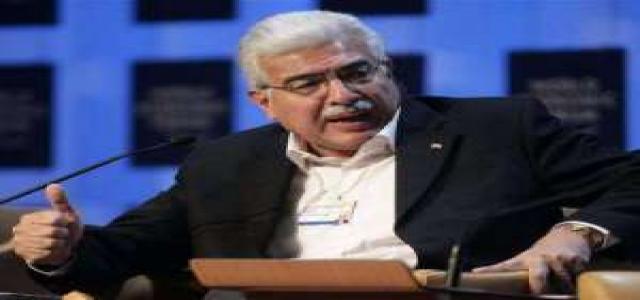
Egypt PM: ‘We Have Taken … Bold Steps’
Egyptian Prime Minister Ahmed Nazif urges the world to respect the results of the Palestinian election, and he defends his government’s handling of the Ayman Nour case.
|
|||||||||
| Sunday, January 29,2006 00:00 | |||||||||
|
|||||||||
|
Egyptian Prime Minister Ahmed Nazif urges the world to respect the results of the Palestinian election, and he defends his government’s handling of the Ayman Nour case. The victory of Hamas in Wednesday’s Palestinian legislative elections sent a shock through the region, and not only because of its implications for the peace process with Israel. Hamas, branded a terrorist organization by the United States, is an offshoot of the Muslim Brotherhood. This militant Islamist organization has been struggling to gain power in many Arab states—including Egypt, where it was founded—since the early part of the 20th century. In an exclusive interview with NEWSWEEK’s Christopher Dickey at the World Economic Forum in Davos, Switzerland, Egyptian Prime Minister Ahmed Nazif talked about the implications of the Hamas victory and the parallels with recent elections in Egypt. Acknowledging the lack of effective secular opposition forces in the Arab world after so many generations of dictatorship, Nazif also addressed the case of Egyptian presidential challenger Ayman Nour, now serving a five-year prison term for allegedly forging signatures on the petitions to legalize his Ghad Party. Excerpts: Which government should respect that? Is Hamas going to accept the framework? They certainly don’t accept the Roadmap as such. Do you have any idea who the prime minister is going to be? In Egypt itself there were big political events this year. The accomplishments you cite with pride during the first year and a half of your technocratic government are mainly economic: cutting the corporate income tax in half, increasing growth from 3.3 percent to 5 percent, boosting foreign-exchange reserves and foreign direct investment. Did the showing of the Muslim Brotherhood in Egypt’s parliamentary elections inject a level of uncertainty into the political realm that’s likely to affect your economic achievements? Now, having said that, does this mean that I believe that there is no relation? That the political side will not affect [the economy]? Of course it will. With time it will. But we had to start moving on the political side as well. Whether we did it all in the best possible way? Probably not. But I think there are many gains as well as lessons learned. First, we’ve seen a more open environment. When we had the presidential elections, for the first time Egyptians saw 10 candidates campaigning freely, completely freely. Now, yes, there’s not a change. President [Hosni] Mubarak came back with a big majority. But that was also expected. At the end you had 10 political parties with their candidates having very good time in the media to explain who they are and what they are. Then we went to the parliamentary elections with the same attitude. We wanted free campaigning, we wanted a transparent system. We even brought in transparent ballot boxes for the first time in Egypt. So there was the intention to improve. It turned out in a different way, because, basically, when you go to parliamentary elections in Egypt, it’s more tribal in nature. You go into villages, you have families working against each other, and of course you have something like the Muslim Brotherhood, a very organized minority—a very strong organized minority—that is out to hijack the whole process. So that was a factor. First lesson learned: we don’t have strong secular opposition in Egypt. There was the government and then there was the “not-government.” I’ve spoken to many people who elected representatives of the Islamists: “Are you selecting them because they are Islamists?” They say, “I’m selecting them because they are not the government.” Like Hamas? People say that if there hadn’t been [Egyptian government] interference at the polls in the latter part of the voting it would have been even higher. The most successful opponent of President Mubarak in the presidential elections was Ayman Nour, a secular politician who got about 7 percent of the vote. I know Ayman, and his wife worked for NEWSWEEK for decades. You know Ayman. He got a pretty severe penalty from the courts. Do you think there’s any chance that he would be pardoned or released early? Could you do that? The problem with Ayman Nour’s case, and here I have my own frustrations with the media, is that nobody looked at the case on its own merits. Nobody’s discussing the case. All you hear about when you read [is that] these are bogus charges. Not true. I don’t think what Ayman Nour did in Egypt, if done in the U.S., would have gone unpunished…. Because I know Ayman, I know he forged those papers. What he did was he said, "I want to collect 2 million signatures, to get this Ghad Party on track." He went in, he probably collected 1,000. So he went in and he duplicated those 1,000 with another 1,000 to make them 2,000. But he only needed 50. He’s been sentenced to five years in prison. As a political matter, let’s say, wouldn’t it make sense to let him out? So it would be a good idea to release him. If it had been your decision would you have put him in jail?
|
|||||||||
|
tags: Prime Minister Ahmed Nazif / Palestinian election / The victory of Hamas / Egyptian Prime Minister Ahmed Nazif / Hamas
Posted in Interviews |
|||||||||
|
|||||||||
|
|
|||||||||
| Related Articles | |||||||||
|
|
 Back to Homepage


 Facebook
  Digg
Digg  Yahoo
Yahoo  Del.icio.us
  reddit
  StumbleUpon
  Mixx
Mixx  Google


Twitter
Facebook
Most Viewed
Join Our Maillist
Video


|
© The Muslim Brotherhood All copyright and re-transport from the site of any material are allowed as long as the source mentioned |
