In a much-anticipated speech in June 2009, President Barack Obama, speaking from the Egyptian capital, sought a "new beginning" in U.S. relations with the Muslim world. Promising to move beyond terrorism and security to focus on issues of mutual interest, the President laid out an ambitious agenda for overhauling ties between his country and the world's 1.57 billion Muslims. Since the speech there has been considerable debate over its meaning and significance: were Obama's words to be accompanied by new programs and concrete initiatives, or were they merely intended to signal a new diplomatic posture towards the Muslim world? Muslim audiences tended to welcome the speech, but indicated that they would reserve judgment until it was translated into action. Months after the speech-with the U.S. administration bogged down by healthcare reform, economic recovery, and ongoing challenges in Afghanistan-the path towards improved relations with the Islamic world remains unclear.
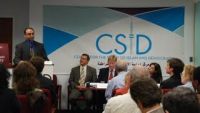
CSID's most recent conference invited reflections on what might be possible for the U.S. and the Islamic world under a new U.S. administration. Following naturally from this previous theme, its 11th annual conference will assess the state of U.S.-Muslim world relations a year after the Cairo speech. What, if anything, has changed in terms of how the United States approaches its major policy challenges in the Muslim world? Do we see signs that governments and other actors in the Muslim world regard the U.S. differently since the new administration came into office?
Paper proposals are invited from prospective participants on the following four broad topics related to the main conference theme. Prospective presenters are also welcome to submit papers that fall outside these topics, but must establish their relevance to the broader conference theme:
A. The Cairo Speech Agenda: Fulfilled or Deferred?
How have U.S.-Islamic world relations fared in the year following President Obama's Cairo speech? Has the new U.S. administration delivered on its commitment to a "new beginning" with the Muslim world? Can we detect significant differences in how the United States is viewed by the Muslim world?
B. Democracy Development in the Muslim World: New Approaches or No Longer a Priority?
The previous U.S. administration placed a premium on democratization in the Middle East and Muslim world, but received mixed reviews on its implementation. Some argue that so far the Obama administration has largely abandoned the democracy agenda in favor of regional security interests. How does the current administration view democratization in the context of other challenges it faces in the Muslim world, and to what extent can we detect any policy shifts?
C. The Role of American Muslims in U.S.-Islamic World Relations
President Obama made special mention of Muslim Americans in his Cairo speech. What role have Muslims in the United States played in promoting ties with the wider Muslim world and to what extent do they serve to promote economic development, political reform, and new thinking? Will the appointment of a Special Representative to Muslim Communities at the State Department have significant consequences for outreach to American Muslims and beyond?
D. The U.S. and Conflict in the Muslim World
From Afghanistan to the Israel/Palestine conflict, much of the U.S. relationship with the Muslim world continues to be defined by ongoing conflicts. How has the Obama administration dealt with these situations and have we seen any signs of new thinking?
Paper proposals (no more than 400 words) are Due by December 10, 2009 and should be sent to:
Prof. Peter Mandaville
Chair, Conference Program Committee
E-mail: conference2010@islam-democracy.org
Authors of accepted proposals will be notified by January 22, 2010 and final papers must be submitted by March 15, 2010.
Selected panelists and speakers must cover their own travel and accommodations to participate in the conference, and pay the conference registration fee by March 15, 2010. Speakers and panelists coming from overseas will receive a contribution of $300 from CSID to defray travel expenses.
1625 Massachusetts Ave., NW, Suite 601
Washington, DC, 20036
Tel. 202-265-1200
info@islam-democracy.org
https://www.csidonline.org/