Egyptian watchdog bans Muslim extremist book
By Tom Perry
Cairo - Egypt"s religious authorities have banned a book about a
puritanical brand of Islam on the grounds that it is offensive to
the faith, the university co-publishing the work said on Thursday.
Tim Sullivan, provost of the American University in Cairo (AUC),
said the decision by al-Azhar, Sunni Islam"s historic centre of
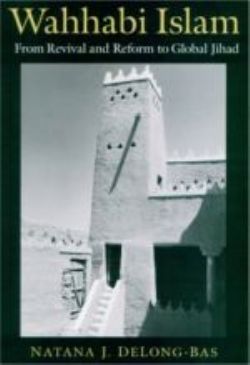
learning, to ban Wahhabi Islam: From Revival And Reform To Global
Jihad was an infringement of academic freedom.
"They just say this is offensive to Islam," he said. "They just say
"No". They don"t really justify it or explain it or go into
detail." The state-owned newspaper al-Gomhuria reported on Thursday
that al-Azhar said the book was "packed with mistakes, full of
hatred towards Islam and discredited the Koran".
Sullivan said official censors had passed the decision on to
al-Azhar because the book dealt with religion. Al-Azhar is a Sunni
Islam seat of learning whose grand sheikh is appointed by the
state.
The book, by Natana J Delong-Bas, is largely based on analysis of
the writings of Muhammad Ibn Abd al-Wahhab, who founded an austere
brand of Islam in 18th-century Arabia.
Wahhabism is practised in Saudi Arabia. Western governments and
some Islamic clerics say it has bred extremism.
"The book essentially argues that Wahhabism has been hijacked by
the jihadists," Sullivan said. A reviewer specialising in the
subject had "recommended enthusiastically that it be published", he
said.
Sullivan said the AUC was co-publishing the book regionally with
the Oxford University Press and I B Tauris, which together
published it in other countries last year. The authorities had
impounded one thousand copies being imported for sale in Egypt.
The book was "packed with mistakes"
"The censor of al-Azhar apparently reviewed it twice and concluded
that they didn"t want to let it in the country," Sullivan said.
"This is the first time there"s ever been a book published by the
AUC press that has been censored."
He said the decision could be linked to forthcoming parliamentary
elections in Egypt, whose society is religiously conservative and
more than 90 percent Muslim.
The Islamist Muslim Brotherhood is likely to pose the most serious
challenge to the ruling party of President Hosni Mubarak in the
elections, beginning in November.
"Anything pertaining to religion is touchy and sensitive and we are
in the election season and that could well have something to do
with it," Sullivan said.